


Missing Cue Sheet Royalties: How Film and TV Composers Get Paid
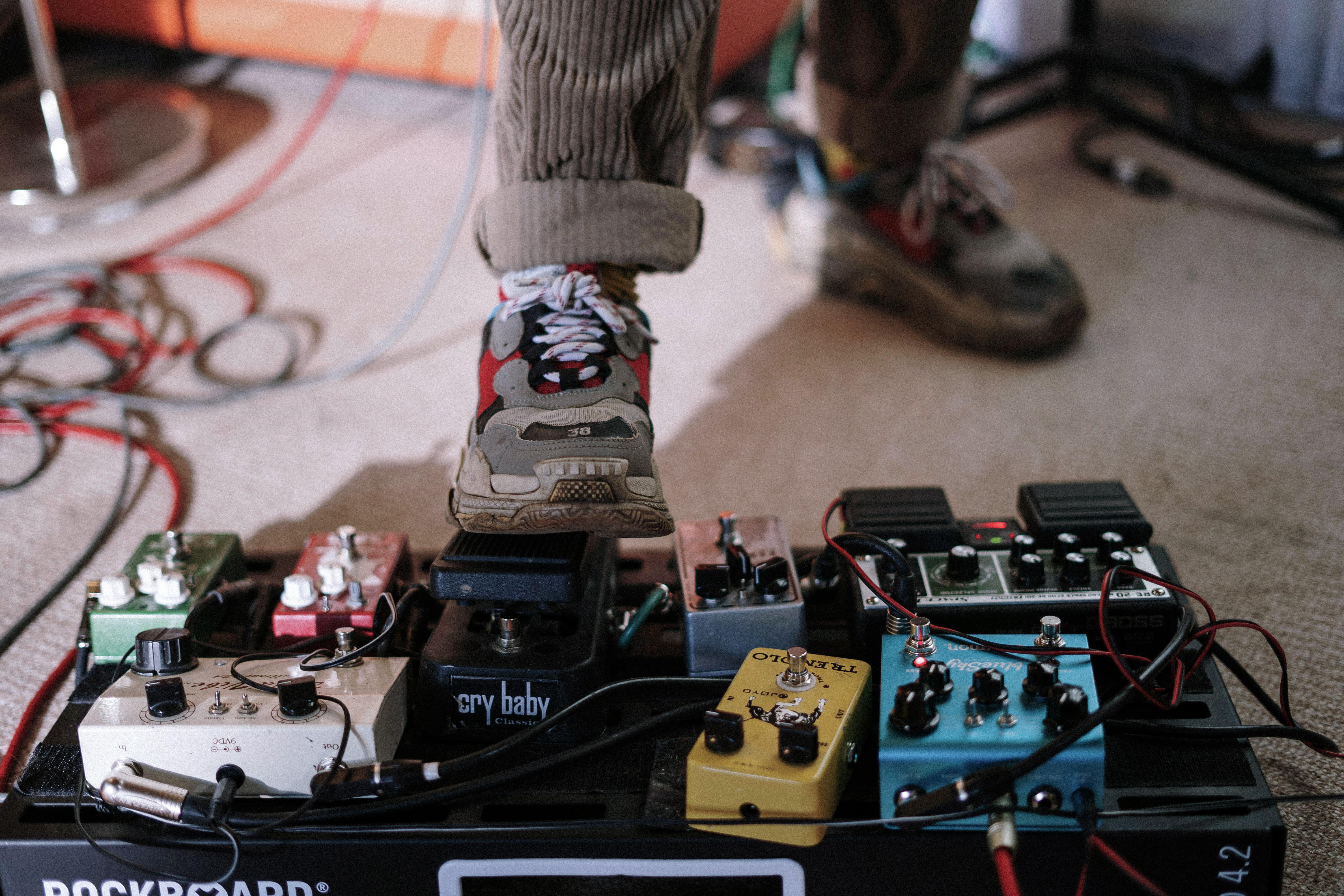
If you write music for film, TV or advertising, you're working in the corner of the industry where the most royalties go missing, and where the fewest people are looking for them.
Streams get talked about endlessly. But if you're a screen composer, streams were never your main income. Your money comes from performance royalties: every time the film airs on television, plays in a cinema, runs on a streaming service or loops in an ad break, the broadcaster pays a licence fee to a collective management organisation, and a share of that fee is supposed to reach you.
Supposed to. Between the broadcast and your bank account stands one document: the cue sheet.
The most expensive piece of paper in film
A cue sheet is the list of every piece of music in a production: title, composer, publisher, duration, how it's used. Collecting societies don't watch films. They read cue sheets. That document is the only way they know your music was in the picture at all.
Which means the entire payment system for screen music rests on a form that:
- someone at the production company was supposed to fill in, during the most chaotic weeks of post-production,
- often wasn't filled in at all, because no one's job depended on it,
- and when it was, frequently arrived with wrong spellings, missing identifiers, outdated splits, or timings from a cut that no longer exists.
When the cue sheet is missing or broken, the royalties don't disappear. They get collected anyway. Broadcasters pay their licence fees regardless, and then the money sits in the societies' unallocated pools, because nobody can prove whose money it is. That's the black box. Across Europe, over 27% of royalties go unclaimed every year, and screen music is especially exposed, for a simple structural reason: no other kind of music depends so completely on someone else's paperwork to get identified. A radio station plays a finished track that fingerprinting can catch; your score is embedded in someone else's product, and unless it was documented at delivery, it's invisible.
It gets worse across borders. A film that sells to 30 territories needs its music data to arrive, intact, at 30 different societies, each with its own formats and quirks. Every handover is a chance for your name to fall off your own work.
And advertising music is the quietest failure of all. In several European countries, ad music is fully reportable to the local society, and almost nobody reports it. Not the agency, not the production company, not the composer, because most of them don't know it's possible. In Hungary, for example, ad music has been reportable for years, and the cue sheets simply never arrive. That's not lost money in a technical sense. It's money that was never claimed in the first place.
What's changing right now
Three things happened recently that every screen composer should know about.
1. The industry finally agreed on a format. In June 2026, CISAC, the international confederation of authors' societies, launched AVR+, the first machine-readable global standard for cue sheet data. It's built on the Global Cue Sheet Standard 2.0, developed together with the recording industry and publishers, and for the first time it carries recording metadata alongside the musical work, which means it supports performers' neighbouring rights, not just composers' rights. In plain terms: the pipes between productions, societies and publishers are being rebuilt so that machines can actually read what's flowing through them.
2. Detection is becoming a solved problem. Monitoring companies like BMAT now track around 9,000 channels across 140 countries, running roughly 80 million audio identifications a day, and generate cue sheets automatically from broadcast fingerprints. Publishers already use this data as evidence: they cross-check what actually aired against what the societies paid, and chase the difference.
3. The data is consolidating. BMI, one of the biggest US performing rights organisations, is acquiring Soundmouse, the platform that handles cue sheets for much of the global broadcast industry, with the stated aim of building the largest cue sheet database in the audiovisual world.
Put those together and the direction is clear: within a few years, the industry will be much better at finding your music. Here's what none of it fixes: whether the money reaches you.
The gap the technology won't close
Fingerprinting can hear your cue in a Tuesday-night broadcast in another country, but only if someone delivered your audio to the monitoring database in the first place. A bespoke score that was never registered anywhere is inaudible to every system built to find it. AVR+ can carry the data cleanly from one system to the next. Neither can fix what was wrong at the source.
If your work was never registered with your society, nothing to match. If your registration says one spelling and the cue sheet says another, no match. If the splits between you and your co-writer were never documented, the payment stalls. If the production never filed a cue sheet at all, the world's best matching technology has nothing to work with.
The black box, at its core, is not a technology problem. It's a data problem that starts on the day the music is delivered, and every automated system being built right now inherits whatever was true on that day. Clean data in, royalties out. Broken data in, black box.
What you can actually do
None of this requires a platform, a lawyer, or permission. It requires being annoying at the right moments.
Put the cue sheet in your contract. One line: the production delivers a completed cue sheet to your society, and you receive a copy, before final delivery. Producers handle it as compliance when it's written down, and forget it when it isn't.
Register everything, including ad music. Every cue, every version, every co-writer split, correct identifiers. If you write for advertising, ask your society how commercials are reported in your country. The answer may surprise you.
Keep your own log. Title, production, broadcaster, dates, durations. When a society statement looks thin, your log is the difference between a feeling and a claim.
Read your statements against reality. If the film aired and the royalties didn't arrive within a couple of distribution cycles, ask. Societies hold unclaimed money for a limited number of years before it's redistributed. There is a clock on your money, and it's running.
Ask about the years you've already lost. Claims can often reach back several years. For a working screen composer, that back catalogue is rarely worth nothing.
Why we're telling you this
Artistic Futures exists because this gap, between what your music earns and what you receive, is measurable, fixable, and nobody's priority but yours. We're a Creative Europe research project building tools to detect and recover unclaimed royalties for independent songwriters and composers, and screen music is where the problem runs deepest.
Before we build, we're mapping the terrain, and that includes your experience. If you write for film, TV or advertising, take the composer survey. It takes eight minutes, it's anonymous, and it directly shapes what gets built.
Someone's been sitting on your money. Let's talk about that.
Related reading: how to find and claim unclaimed music royalties in Europe.
Subscribe to the monthly brief
Royalties go missing quietly. We're documenting how, and building something to stop it.
Subscribe to the monthly brief
Sources: CISAC: AVR+ launch · Music Business Worldwide on AVR+ · BMAT monitoring · MBW on BMI/Soundmouse
Artistic Futures is co-funded by the Creative Europe Programme of the European Union. #ArtisticFutures #CreativeEurope
.png)
.jpg)